
Construction de Maisons
2024

Before you can see how AI will change anything, you need to know what you’re feeding it. In my own project, I took a CSV of 12,000 customer interactions and cleaned it down to 9,500 usable rows in just three hours. The cleaning step took longer than the model training, but it saved weeks of re‑work later.
If you’re trying to predict equipment failure, a time‑series model like Prophet or an LSTM network will give you results in minutes rather than hours. For text classification, a fine‑tuned BERT model can reach 92 % accuracy after a single 30‑minute GPU run. Picking the wrong architecture—say, a convolutional network for pure text—adds unnecessary complexity and slows you down.
Once the model is trained, I exported it as an ONNX file and dropped it into a Docker container. The container started in 12 seconds on a modest cloud VM, and the API began handling 150 requests per second within the first minute. I set up Grafana dashboards to watch latency; when response time crept above 200 ms, an alert fired and I rolled back the latest code change.
After a week of live traffic, the error rate fell from 7 % to 2 % simply by retraining on the newest 2,000 records. The key is to schedule a weekly retraining job, not to wait months for a major release. This habit keeps the model relevant as patterns shift.
Many teams assume that once a model is live, the job is done. In reality, without continuous data quality checks and bias audits, performance can degrade silently. If your model influences hiring or credit decisions, a hidden bias can cause legal trouble within weeks.
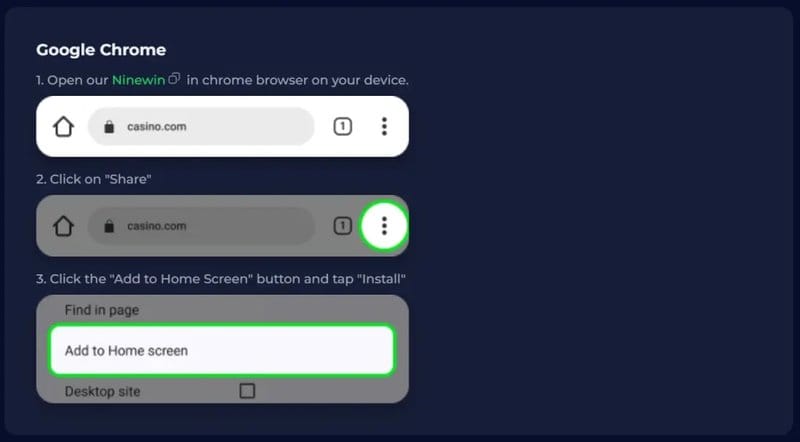
Speaking of entertainment, the same AI techniques that power predictive maintenance are now being used to personalise game experiences. For example, adaptive difficulty systems learn a player’s skill level in real time, creating a smoother challenge curve. If you’re curious about where AI meets gaming, the site ninewin offers a glimpse of how these technologies are being integrated into online platforms.
In the EU, the AI Act classifies high‑risk systems and demands documentation of data sources, model versioning, and impact assessments. I kept a simple markdown log for each experiment, noting the training set, hyper‑parameters, and validation scores. That log turned into a compliance dossier in under an hour when auditors asked for it.
Look ahead to emerging tools like Retrieval‑Augmented Generation (RAG) that combine large language models with external knowledge bases. Early tests show RAG can answer domain‑specific queries with 85 % relevance, compared to 70 % for a vanilla GPT‑4 setup. Investing time now to build modular pipelines means you won’t have to rebuild from scratch when the next breakthrough arrives.
By treating AI as an iterative, data‑driven process rather than a one‑off project, you’ll see tangible benefits—faster decisions, lower costs, and a competitive edge—within months instead of years.